From River Mouth to Rugged Coast: The Ralph Family Legacy
REELED IN HISTORY SERIES – 2
For the Ralph family, fishing was not a tradition passed down through generations, it was a path shaped by circumstance, resilience and a deep connection to the Mid West coast. What began as a necessary change of lifestyle for health reasons has grown into a multi-generational presence in WA’s Western Rock Lobster industry, developed across one of the most rugged and remote stretches of coastline in the state.
“It wasn’t something Allan planned,” the family reflects. “He came from farming, not fishing, but the move to the river changed everything.”
A New Beginning at the Murchison
The story begins with Allan Ralph, the first of the family to fish. Originally a farmer at East Binnu, Allan’s health deteriorated over time due to prolonged exposure to wheat dust. On medical advice, he made the difficult decision to leave the land behind in search of a healthier way of life.
Allan and his wife Dulcie relocated to a modest shack at the mouth of the Murchison River, a place that would quietly become the foundation of the Ralph family’s future. It was here that Allan was introduced to rock lobster fishing by close friend Hector Mainwaring, who showed him the fundamentals of the trade.
When Hector later offered Allan the opportunity to purchase his vessel, Allan took the leap, a decision that marked the beginning of the Ralph family’s fishing legacy.
Building a Presence on the Coast
Allan’s first boat, Bessy M (1954), marked the beginning of the family’s fishing operations. Over time, the business grew steadily, shaped by experience and the realities of fishing one of WA’s most exposed coastlines.
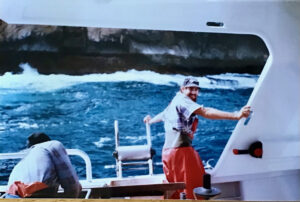
The Ralph family worked the waters north and south of Kalbarri, particularly along the cliffs near the Zuytdorp coast, where isolation, weather and limited infrastructure demanded self-reliance and sound judgement.
“It was a tough coast to learn on,” the family says. “But it taught you resilience early.”
Life on the Coast
Growing up in Kalbarri meant a childhood shaped by the sea. Days were spent fishing, surfing and camping, with life largely lived outdoors. The rhythm of the lobster season influenced family life, school holidays and work routines.The season was long and hard. When the off-season came, it was well earned.
Off-season breaks were welcomed after months of physical labour, particularly following the traditional season that ran from mid-November through to the end of June.
Old Gear, Hard Work
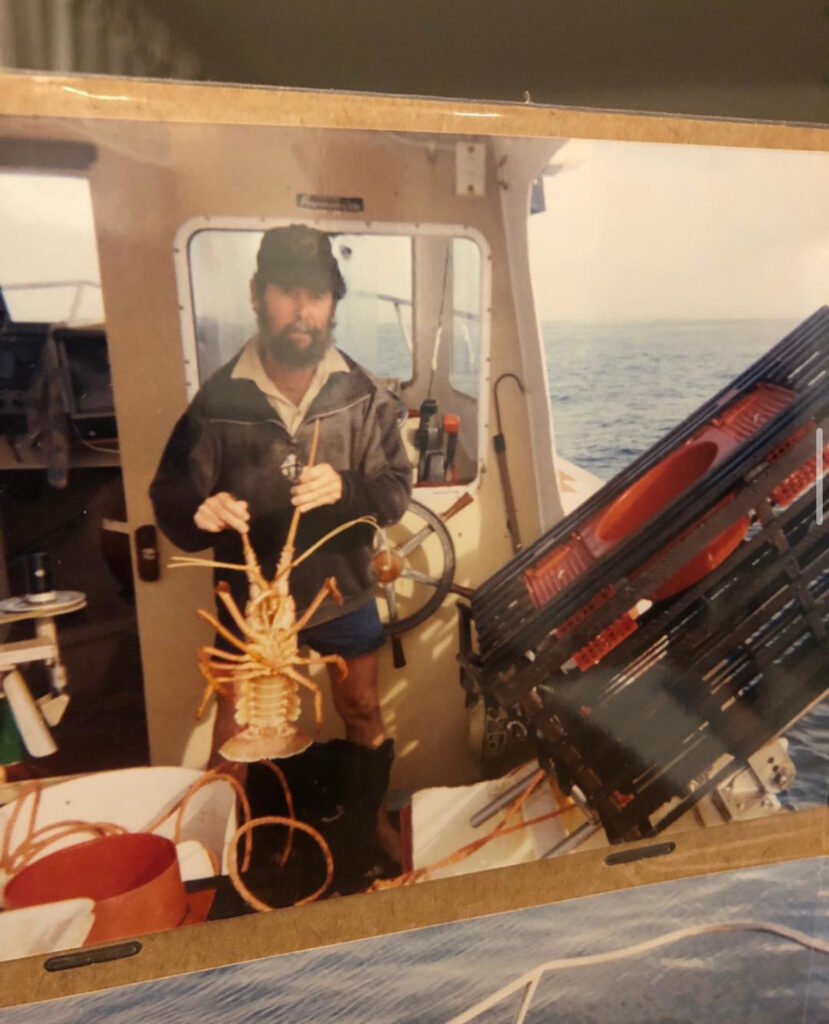
The early years of fishing were defined by physical effort and ingenuity. Pots were steel round frames covered in chicken wire, hauled using hemp rope that was heavy, unforgiving and labour-intensive. Some of the earliest pots were made from grevillea, bent and shaped by hand.
Fishing the Mid West coast came with constant challenges. Flooding, rough seas and river closures regularly disrupted operations. At times, the Murchison River mouth would close completely for months, preventing boats from entering or exiting.
When that happened, vessels were forced to anchor at Jake’s Point or Red Bluff, unloading lobster directly onto the rock, a process that was often dangerous, particularly in heavy swell.
“It could be pretty treacherous,” Mark Ralph recalls. “But you adapted, because you had no choice.”
The Next Generation
The second generation of Ralph fishers grew up immersed in this environment, with family members working different stretches of the coast.
David began fishing at just 14 years of age, skippering his first vessel the Jaquilin when he was 18. Much of his career was spent south of Kalbarri along the cliffs, including fishing the whites out of Port Gregory and Horrocks, before extending further north to Dirk Hartog Island and Shark Bay as experience and opportunity allowed.
David’s brother Charlie also built a long and respected career fishing south of Kalbarri along the cliffs, working some of the most exposed and demanding ground on the Mid West coast. Charles’ first vessel was Sister Kaye followed by Dawn Breaker.
Passing the Helm
David and Charlie’s sons continued the tradition in their own ways.
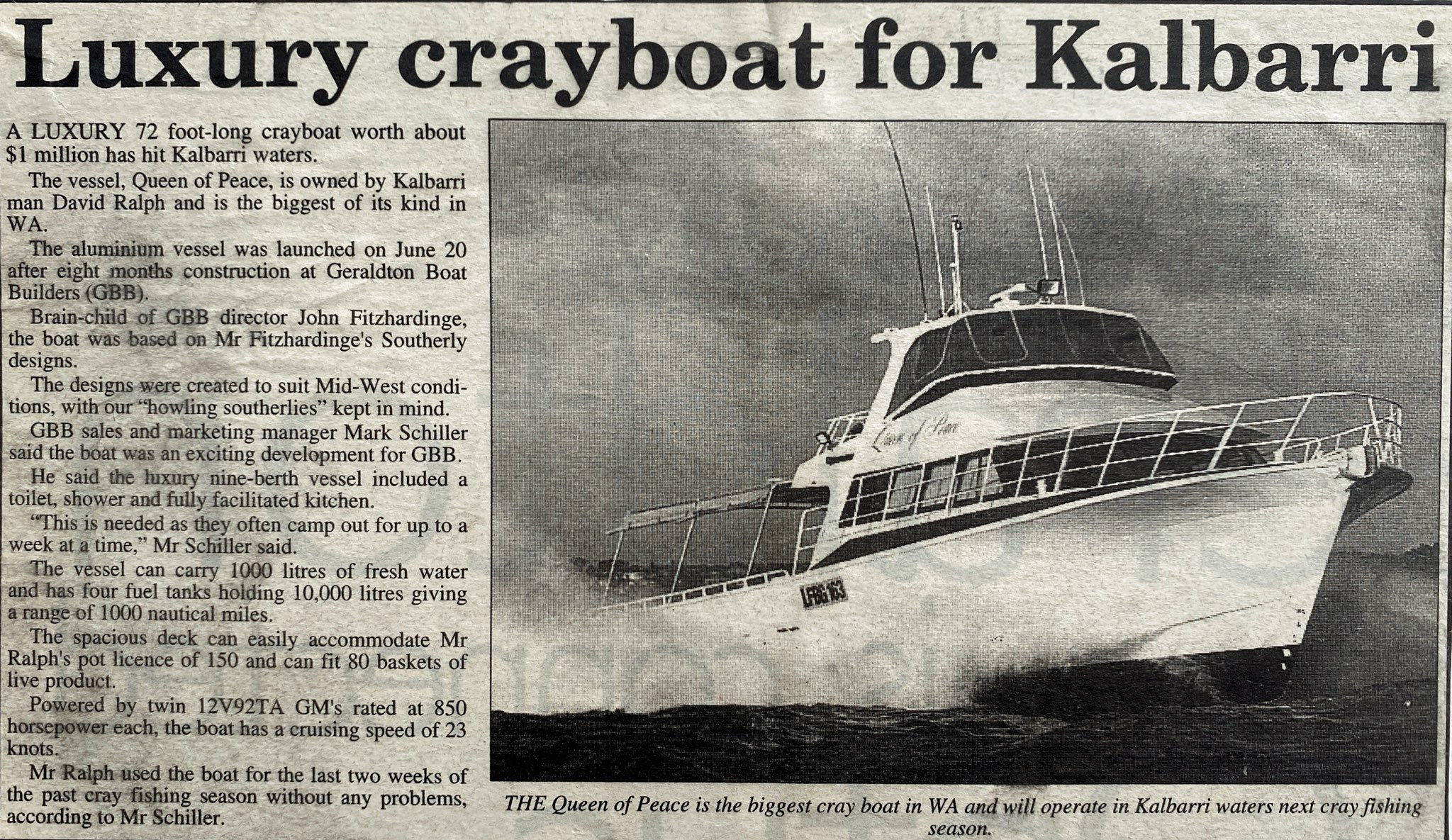
Mark skippered several family vessels including Miss Murchison, Queen of Peace and Rising Moon. Mark later became owner of the Rising Moon, maintaining the family’s strong presence in the fishery. David at 78 today, still ventures out with his son and grandson whenever an extra hand is needed.
Mark’s son Bailey Ralph represents the fourth generation. After completing his Marine Science degree he returned home to work aboard the Rising Moon with his Dad. He also purchased the Jetty Seafood Shack, selling local seafood. Bailey completed his Skipper’s ticket in 2023 and is currently enjoying being a deck hand on Rising Moon and also skippers when required.
“Bailey came through with the qualifications”, Mark says, “But the real learning is happening on the water”.
Mark and Bailey are also operating Rising Moon as a charter vessel when not commercially fishing showing travellers the commercial lobster industry, Kalbarri Offshore Adventures.
Charlie’s son, Ian Ralph, also carries the family legacy into the next generation of fishing. As the industry evolved and opportunities expanded, Ian pushed further north of Kalbarri, opening up new fishing grounds and adapting to a broader range of conditions. Purpose-built to match his approach to fishing, Gambler is an impressive vessel designed for endurance, generous carrying live product capacity, onboard comfort and overall operational efficiency, a boat that perfectly reflects Ian’s working style and forward-thinking mindset.
“It’s a family legacy that continues to grow”, says Ian.
“My son Jackson works onboard as a Deckhand and its wonderful sharing our love of the ocean together”.
With decades of experience behind him, Ian has seen both the good times and the hard ones, developing a strong understanding of what makes successful fishing: efficiency, reliability and the ability to adapt.
Fishing the coastline between Kalbarri and Shark Bay’s South Passage requires constant awareness. Sudden weather changes and onshore winds demand preparation, good decision-making and respect for the coast.
After completing an apprenticeship as a chef, Vaughan Ralph began fishing professionally for his father at the age of 19, having already spent much of his childhood on the water. Over the next 14 years, Vaughan worked alongside his father David and brother Mark, skippering both the Miss Murchison and the Rising Moon.
“It was a natural progression,” Vaughn reflects. “The boat always felt like where I belonged.”
David’s first son Wade also began fishing young, starting at just 14 years of age. Wade spent his life working at sea across a wide range of fisheries, from rock lobster to tuna, prawns, scallops and wet-lining.
“He wasn’t happy unless he was on a fishing vessel,” Vaughn recalls. “It didn’t matter where it was or what it was doing.” Sadly, Wade passed away three years ago, leaving behind a legacy defined by hard work, versatility and an unwavering love of the ocean.
After more than a decade in the lobster industry, Vaughan’s path took him further offshore. He spent 12 years in the oil and gas sector, working with Bhagwan Marine, a role that kept him at sea for extended swings, sometimes five weeks at a time and even delivering tugs as far as Japan.
Despite the scale of that work, the pull of home remained strong. Eventually, Vaughan returned to Kalbarri, where he and his brother Mark established a charter business, building it from the ground up, Kalbarri Rock Lobster Tours & Charter.
“To start a business with my brother and see it grow has been one of the best things I’ve done,” Vaughn says.
Today, the business offers whale watching tours, sunset cruises and fishing charters, but the most popular experience by far is their rock lobster pot pulls, a hands-on way to share the story of the industry with the public. When not commercially fishing, Mark runs tours on his vessel, Rising Moon.
Now spanning four generations, the experience brings the Ralph family story full circle, from Allan’s first pots to sharing the industry’s history with visitors on the water.
“‘Proud’ and ‘passionate’ are words we hear a lot from our guests,” Mark reflects.
For the Ralph family, experience remains the most valuable asset of all. Knowledge passed from one generation to the next has shaped how they fish, how they work, and how they remain connected to the sea.
“The best advice is still the simplest, always listen to the experienced fishermen, they’ve already made all the mistakes. Learning from that is what keeps you going and getting better at what you love”
By Cam Allen (Content provided by the Ralph Family